
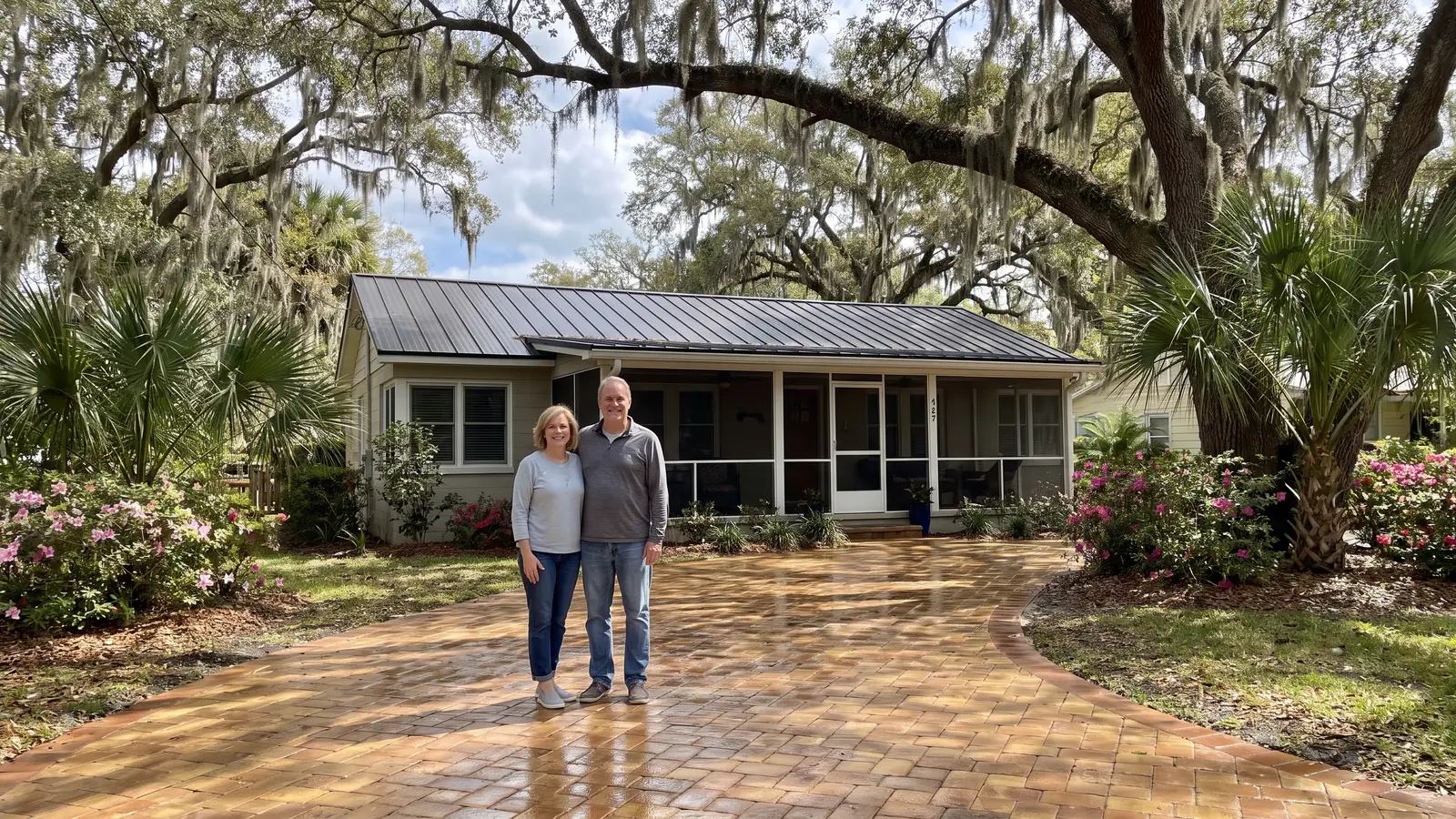
Paver sealing for Indialantic homes
Paver Sealing in Indialantic, FL
Indialantic pavers that take salt and blowing sand all year can be washed and sealed, so call (321) 321-4984.
- Brings out deeper paver color
- Fresh joint sand helps lock pavers in place
- Gives weeds less room to grow
- Makes the surface easier to keep clean
- Free estimate, no obligation
Request a Free Estimate
Free, no obligation.
Fast, careful paver sealing in Indialantic
Paver sealing is on offer all over Indialantic, from the ocean side of Miramar Avenue to the homes along Riverside Drive. A local contractor handles the wash, the sand and the sealer, and the first visit is free. Call (321) 321-4984 to hear back within 1 business day, often sooner.
Does the patio feel gritty underfoot, with a gray cast and joints thinning out? A wash, fresh sand and a new coat settle the surface and bring back the color. To ask a question first, you can ask for a free estimate.
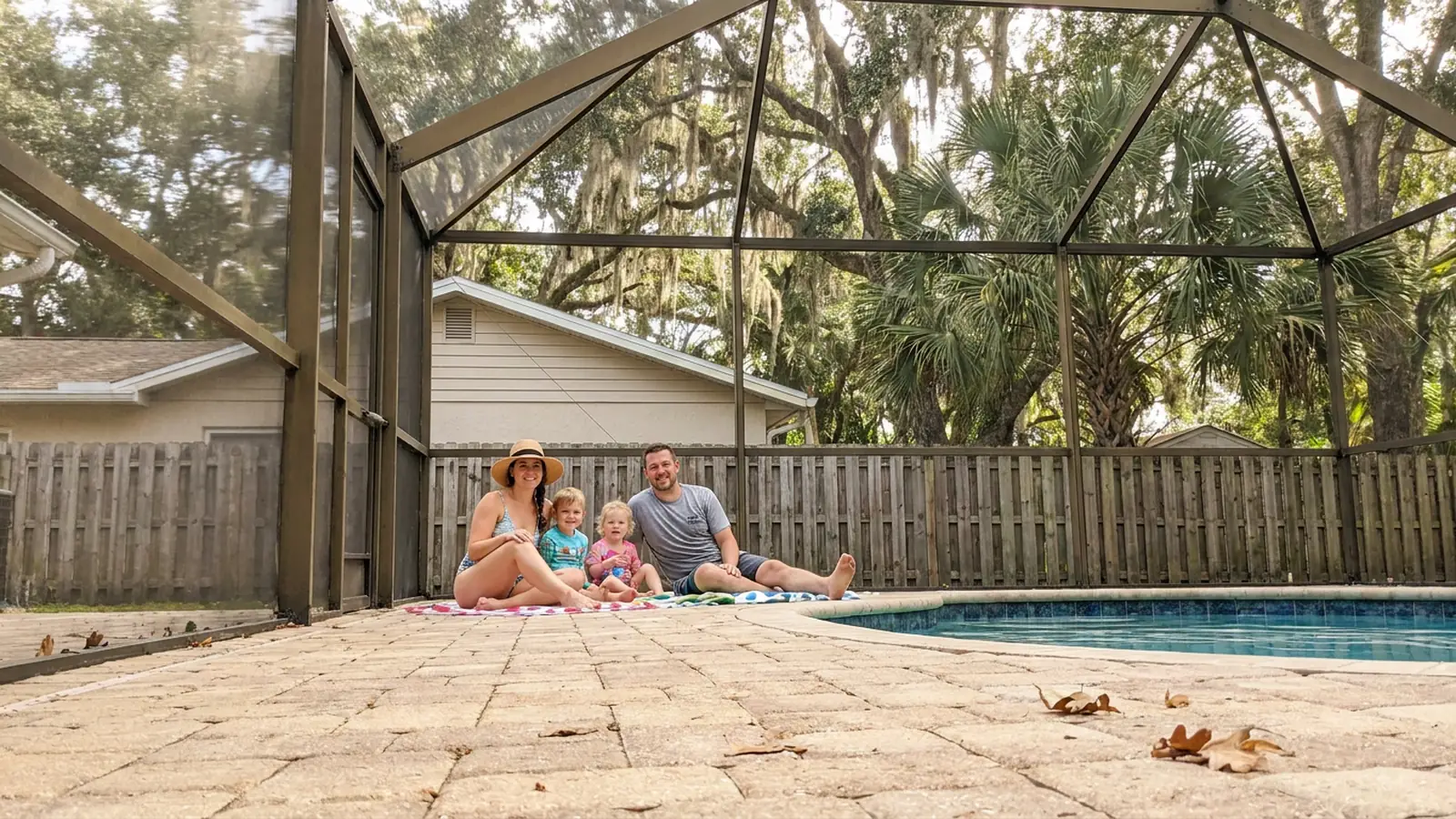
Why hire a local paver sealing contractor in Indialantic?
On a barrier island, salt, grit and humid mornings change the work, and most inland crews never see them. A local contractor knows the island, so ask for a free estimate to hear how that applies on your block.
Free, and quick to book
A contractor checks your Indialantic patio or drive at no charge. A price comes before you agree to anything.
A wash built for salt
A hose will not lift salt film. The contractor plans a full wash before any sealer is opened.
Matte hides the sand
Matte keeps a relaxed beach-house look. A wet look pops color but shows scuffs and sandy footprints sooner.
Your call, always
You choose the day and the finish. An Indialantic estimate carries no obligation.
Get Your Free Estimate in Indialantic
Tell us about your pavers in Indialantic.
Free, no obligation
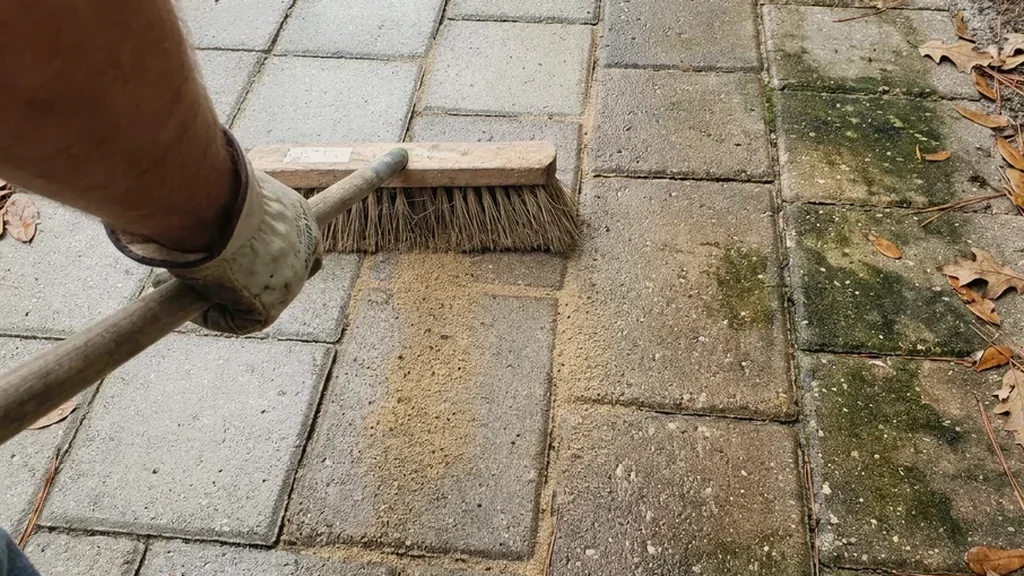
What paver problems show up most in Indialantic?
A salt film you cannot see
UF/IFAS says coastal sites deal with wind and inescapable salt, and Indialantic sits between the ocean and the lagoon. One Brevard paver company says salt leaves a fine film that a garden hose does not remove. Sealer put over that film bonds to the film, which means it peels first along the edges that catch the most spray. A full wash comes before the first coat. On the beach side of town, that spray reaches the front patio and the pool deck, and it settles on screens and railings too. A plain rinse looks clean and leaves the film behind, which is why the contractor treats the wash as the main step and not a quick pass. Railings, screens and pool cages catch the same spray, so a contractor may rinse them as a courtesy. Mention anything metal near your pavers.
Blowing sand that scuffs the surface
The same company says island wind carries sand as well as salt, and the sand works like slow sandpaper on joints and paver faces. Over the years that dulls color and thins the joints. Sealing closes the surface so grit has less to grab. It will not stop the wind, but a sealed surface sheds sand better. Pool decks and patios near the water see the most grit, and bare joints lose sand first. If you can feel a rough texture underfoot, ask the contractor to look at the joints as well as the paver faces. That grit also lodges in the joints and works like a file on the edges of each paver. Rough, dull edges are an early sign.
Humid mornings that slow drying
The Atlantic and the Gulf Stream shape the weather here, and the island holds moisture. One Brevard company says high humidity can stretch drying times and spoil a coat. Sealer needs a dry surface, so a humid morning can push a job back. September through May tends to bring lower humidity. That makes the sealing date a little less certain on the island than inland, and that is normal. A good contractor will say so up front and keep a spare day or two in the plan instead of rushing a wet surface. That is why an early start helps. A job begun at first light has more time to finish before the afternoon breeze and clouds roll in.
Pavers on older lots
A Brevard paver company citing the county tax roll says the typical single-family home in Indialantic was built in 1970 and about 90 percent were built before 2000. Pavers on those lots may be decades old, with coats from several owners. A water-based sealer will not hold over a solvent-based one. The contractor identifies the old coat first and then picks the new product. If your pavers came with the house, ask what you can about past work, even a year or a company name. A clue like that saves a test patch and helps match the next coat to what is already down. If your pavers came with the house, a photo of any old invoice or sticker on the garage wall may name the sealer.
Tight spaces and shared fences
The Town of Indialantic is about a mile square, so yards, pool decks and neighbors sit close together. Rinse water and overspray have little room to wander. A contractor protects plants, screens and cars next door before washing. Tell the contractor about narrow side yards and shared walls when you call. Pool equipment, screened lanais and parked cars are all within a few steps of the work. A short walk-through before the wash lets you point out anything that needs covering. Shared fences, cars and bikes all sit within a few steps of the work. A short walk-through before the wash lets you point out what needs covering.
Do pavers near the ocean in Indialantic need different care than those by the lagoon?
They can, because wind and salt hit the two sides differently. The beach side runs along Miramar Avenue, which is State Road A1A, near Nance Park and its oceanfront boardwalk. Salt spray reaches those blocks first. When you ask for a free estimate, say how many streets you are from the beach.
On the lagoon side, Riverside Drive runs the length of Indialantic and Greater Indialantic, and homes sit near the Indian River Lagoon. Damp air hangs there on still mornings, so green film shows up on shaded pavers. Washing clears the film, and a sealed surface slows its return. If your yard faces the water, call (321) 321-4984 and mention it.
Greater Indialantic shares the town's ZIP code and includes Canova Beach, Ocean Park, Palm Colony, Rio Linda, River Shores, Riviera, Shady Shores and Terrace Shores, among others. Each has its own mix of lot sizes and house ages. A contractor can serve any of them, so ask for a free estimate and name your neighborhood.
What does paver sealing cost in Indialantic?
On the island, Brevard companies list $1.85 to $4.00 per square foot for cleaning, sanding and sealing. Extra salt film, old sealer or thin joints can lift a bid. A lone patio costs less in total than a driveway and pool deck together. For a price tied to your pavers, ask for a free estimate.
Access plays a part. A short drive off a quiet street is quick to wash and seal. A courtyard behind a gate or a patio reached only through the house takes more hauling and more hand work. The contractor can spot those details on a visit, and you can call (321) 321-4984 to set one up.
| Paved area | Typical example | Clean, sand and seal |
|---|---|---|
| 300 sq ft | Small patio or walkway | $555 to $1,200 |
| 600 sq ft | Two car driveway | $1,110 to $2,400 |
| 1,000 sq ft | Large driveway or pool deck | $1,850 to $4,000 |
| 1,500 sq ft | Driveway plus pool deck | $2,775 to $6,000 |
Math based on the $1.85 to $4.00 per square foot that Space Coast paver companies publish. Your contractor sets the actual price after seeing the surface. Repairs, leveling and stripping failed sealer are usually extra.
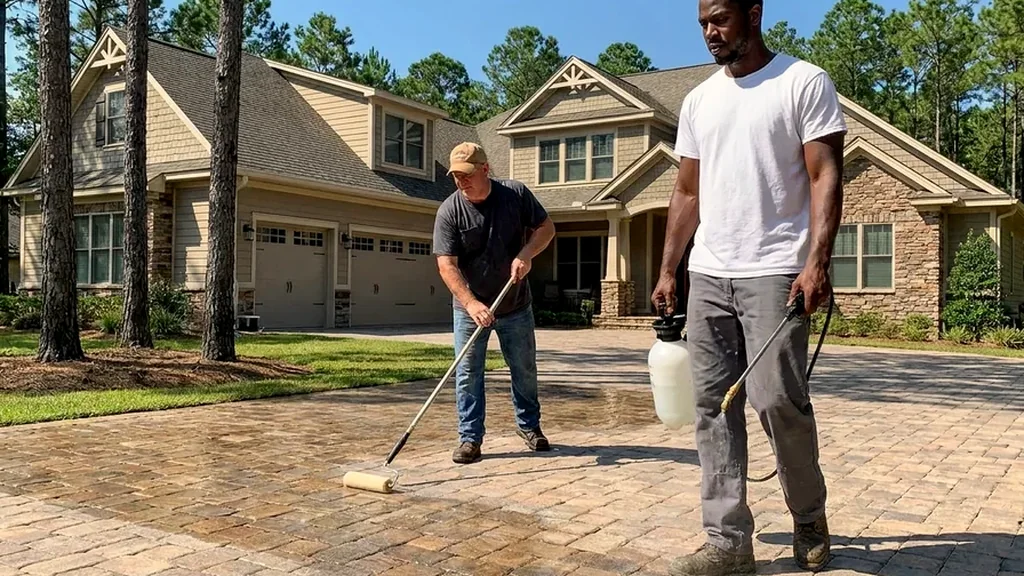
How does a paver sealing job work in Indialantic?
Read the surface and the salt
The contractor walks your Indialantic lot first. Wind direction, shade and low corners show where salt film and damp settle. Sunken pavers are fixed before sealing, since a coat holds any dip it covers. An earlier sealer, if any, is named now. Mention past staining, sunken spots or earlier sealing, since each one changes the plan and the price.
Rinse out the film and grit
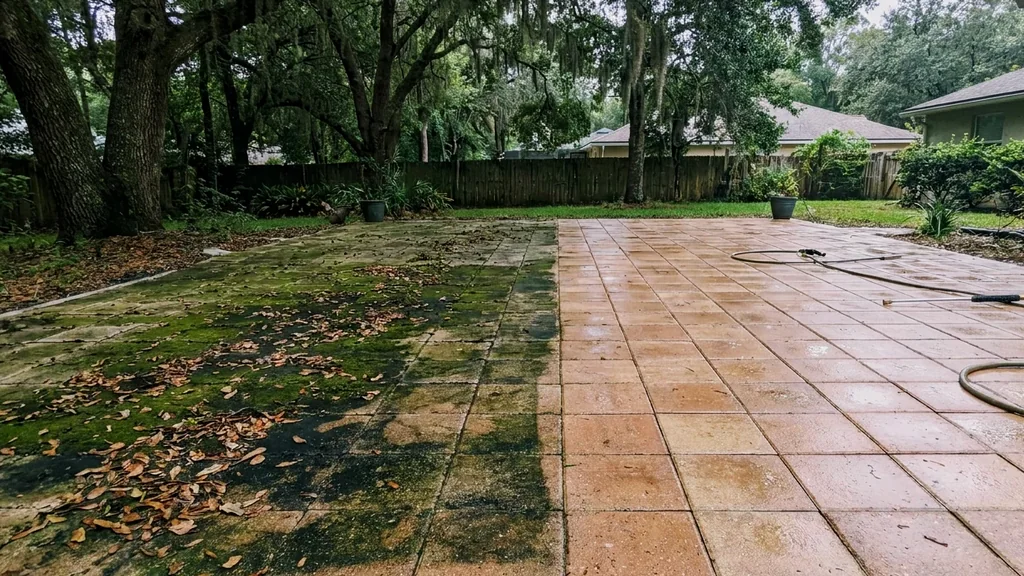
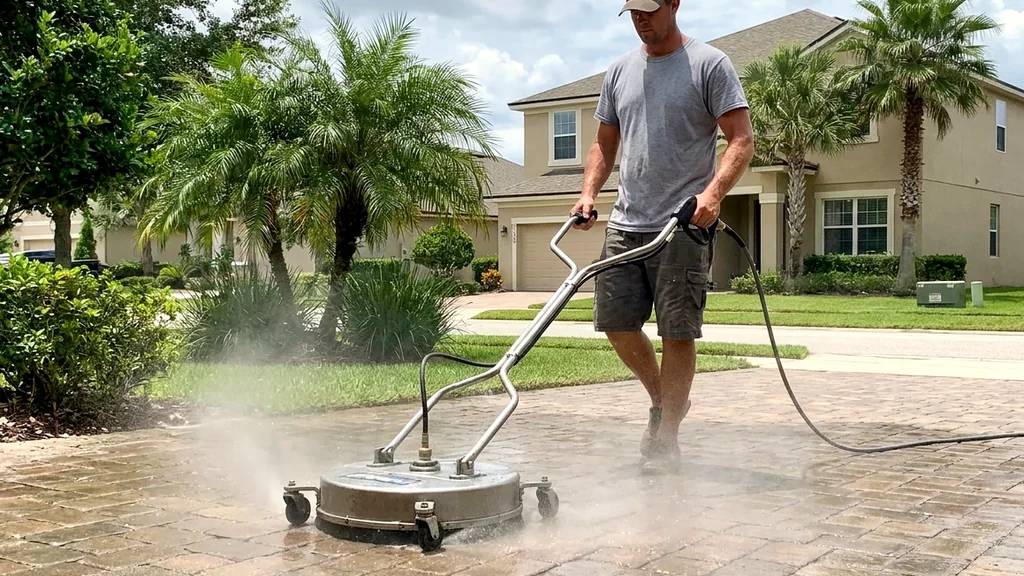
A real wash is next, because a garden hose will not lift a salt film. Green film, stains and loose grit come off, and plants, screens and the neighbor's yard are shielded. When this step ends, the pavers should look flat and clean. Rust, oil and green film are treated while the surface is wet, so each is gone before the coat. A clean surface also shows where the color has truly faded.
Pack sand back into the joints
Washing takes sand out of the joints, so new sand goes in first. Full joints steady the pavers and keep weeds out. On a breezy day the crew may sweep twice so loose sand does not blow off. A little extra time here helps the coat last. Tight joints keep wind from stripping sand later, so the contractor checks them along the edges first.
Wait out the damp
Sealer needs pavers that are dry through and through. On the island, dew and sea breeze can keep pavers damp longer than they look. One Brevard company calls September through May the drier, less humid part of the year. A careful contractor waits instead of sealing a damp surface. Morning dew can leave the sand in the joints wet after the surface looks dry. A few extra hours cost less than a cloudy coat.
Finish with the sealer you chose
Sealing comes last, in the finish you chose. A wet look gives deeper color but shows scuffs sooner than matte. One Brevard company plans on a reseal roughly every two to three years on the island. Ask how long to stay off the pavers that day. Keep cars, bikes and pets clear until the contractor says it is safe. Blowing sand can mark a fresh coat, so a calm window is a plus.
Complete paver services in Indialantic
Indialantic jobs run in a short list: wash, re-sand, dry, seal. The wash is the star, since it lifts the salt film a hose leaves behind. Fresh sand fills the joints before the sealer goes on. For the time each part takes on your lot, call (321) 321-4984.
Patios and pool decks near the beach collect salt and grit, and shaded corners hold algae. Driveways take tires and street sand. Walkways at the front of older homes may carry several old coats. Say which of these you have when you ask for a free estimate.
Pick water-based or solvent-based first, then matte or wet look. An earlier owner's solvent-based coat rules out a water-based one. Matte suits a relaxed beach look and hides sand better than a gloss. Call (321) 321-4984 to talk through the finish for your Indialantic home.
The weather sets the pace. Late May to early October brings thunderstorms to Brevard, and humid mornings slow drying all year. A contractor may offer a drier week or a later start. For a date that fits your street, ask for a free estimate.
Questions to ask before you hire
- Do you refill the joints with new sand, and which kind?
- Would a matte finish or a wet look suit my driveway better?
- Does the quote show how many square feet you measured and where?
- Will you test a small spot first so I can see the finish before the whole driveway is done?
- Can you put the estimate in writing with the sealer product named?
- How long before cars can park on the driveway again?
- Will you fix sunken or loose pavers before sealing, and is that priced separately?
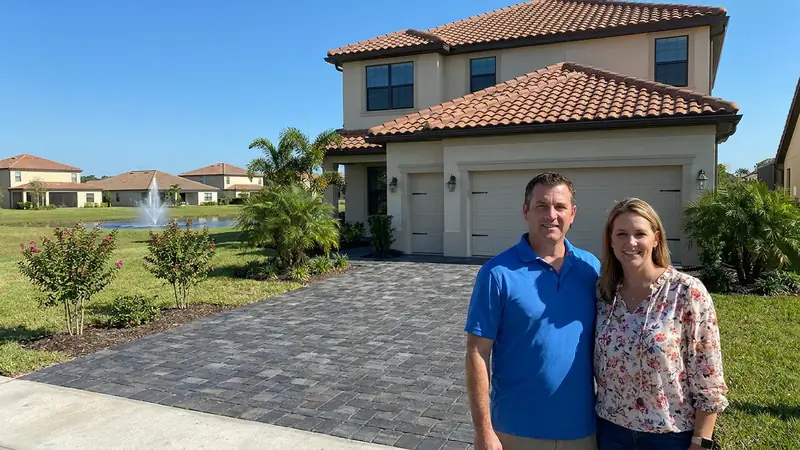
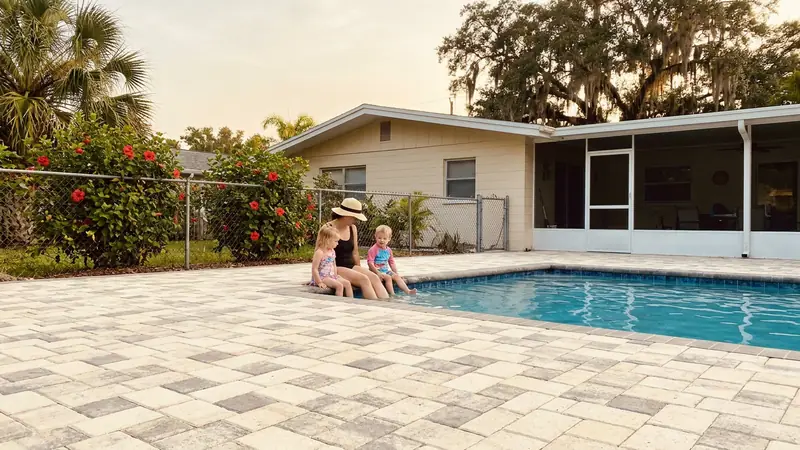
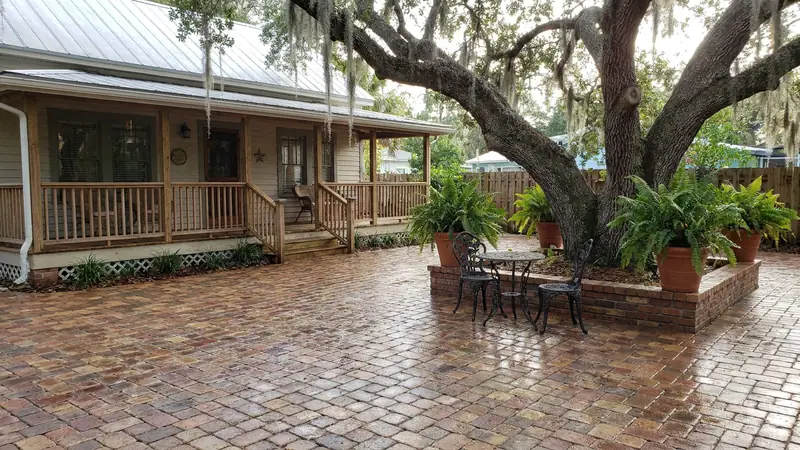
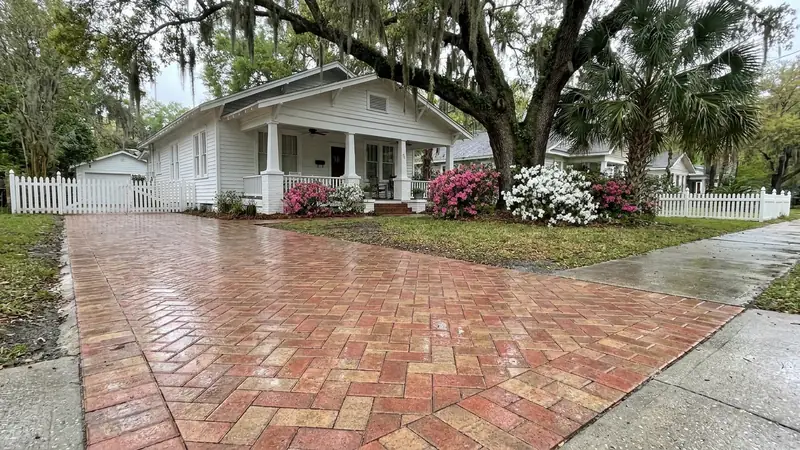
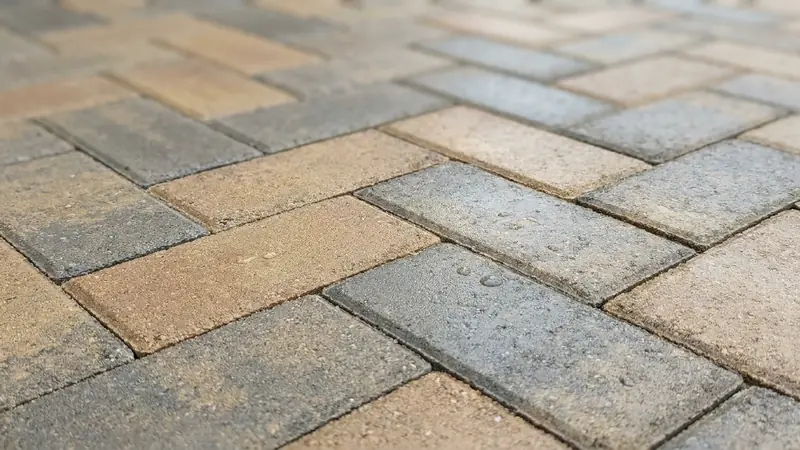
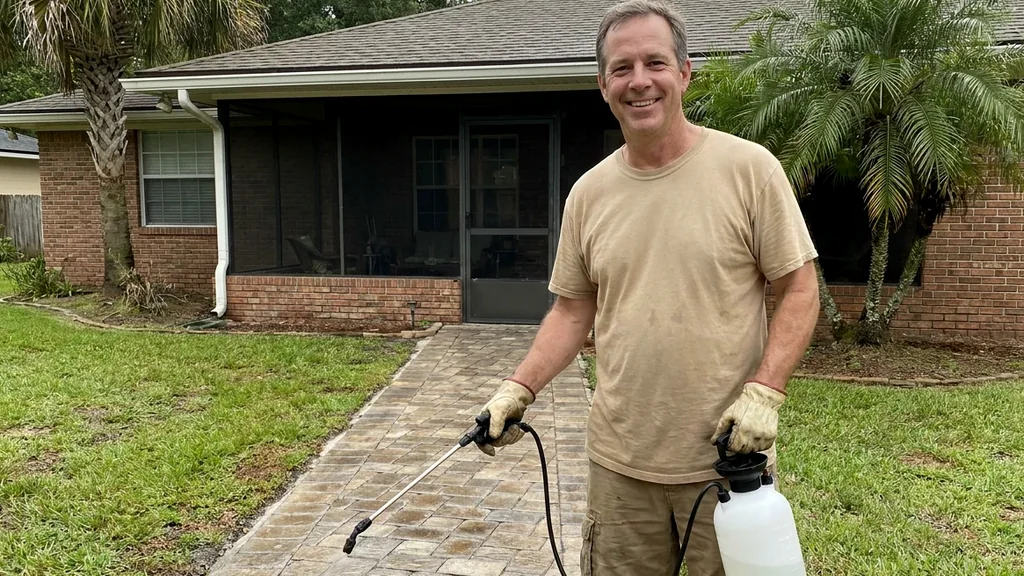
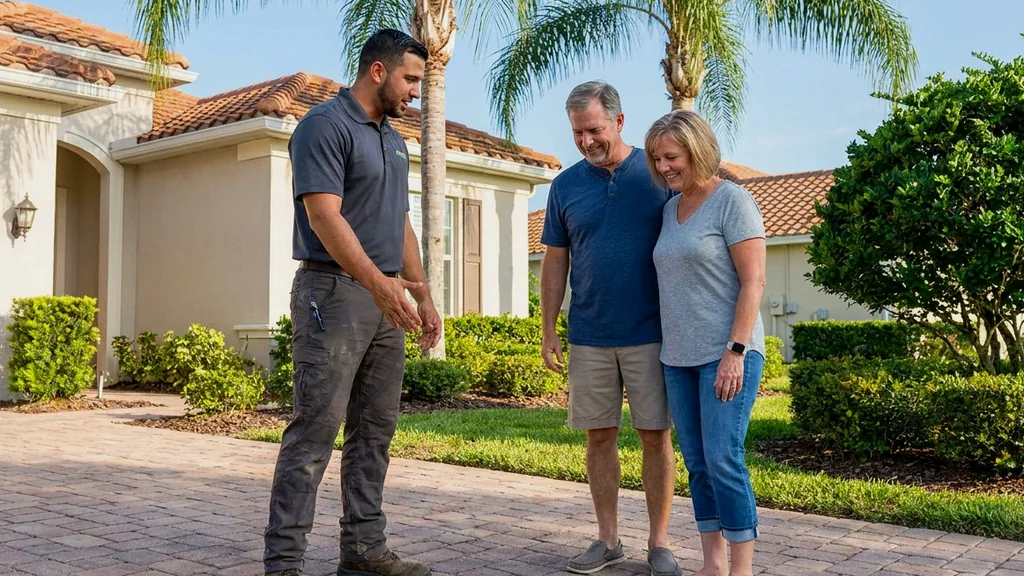
What do sealed pavers look like around Indialantic?
Why local matters in Indialantic
A contractor who knows the island asks how close you are to the water, since salt and wind change what a wash must do. A driveway three blocks inland differs from a patio on the ocean side. An outsider may never ask. To find a contractor who works on the island, call (321) 321-4984.
Timing matters as well. Sea breezes and dew can hold moisture in pavers after the top looks dry, so a rushed coat can turn cloudy. A contractor used to the island waits for a truly dry surface and keeps a spare day in the plan. To ask about a damp week, ask for a free estimate.
Small lots call for care. In a town about a mile square, a patio often sits a few feet from a neighbor's fence or pool, and rinse water has to stay put. A local contractor shields those spaces while washing and sealing. If your yard is tight, ask for a free estimate and describe it, with no pressure to book.
How did Indialantic get its name and its start?
The name blends Indian River and Atlantic, and it fits a town between the lagoon and the ocean. Ernest Kouwen-Hoven came from the Netherlands, bought beachside land in 1915 and called it Indialantic-by-the-Sea. The first map was recorded in 1916, and the town was incorporated in 1952. If you live near the old oceanfront, call (321) 321-4984.
The Indialantic Casino went up in 1923 where Nance Park stands today, and the Tradewinds Hotel once stood on South Shannon Avenue. The town became a bird sanctuary in 1975. Sea turtles nest on the beach from March through October, and Fifth Avenue is the historic downtown. If your home is near any of these spots, ask for a free estimate and tell the contractor which block.
Frequently Asked Questions
How much does it cost to seal pavers in Indialantic?
Published Brevard prices run from $1.85 to $4.00 per square foot to clean, sand and seal. An Indialantic job lands inside that range based on salt film, old sealer and missing joint sand. The quote should state the area measured, so a bid from another company lines up beside it. Ask for the area to be listed by surface so every part of the price is clear.
How often should Indialantic pavers get another sealer coat?
Companies often name two to five years between coats, though the island tends to sit at the short end. One Brevard company plans on roughly two to three years here, where salt and sun wear sealer faster. A look each year catches the fade early. Check the pavers once a year, and look first at the edges that catch the most spray.
Is sealing worth it for an Indialantic patio?
They do not have to be, but sealing helps them resist stains, weeds, salt and fading. A sealed patio also sheds sand better. It needs a new coat down the road, so weigh that upkeep against the cleaning it saves. Sealing also makes a patio easier to hose down, since dirt sits on top instead of sinking in.
What are the downsides of sealing pavers in Indialantic?
The main downsides are upkeep and timing. Sealer wears down, so a new coat comes due, and a wet look shows scuffs sooner than matte does. It also needs a dry surface, which can push a job back on a humid island morning. Matte hides scuffs better, and either finish needs a new coat from time to time.
Will sealing keep sand from blowing across my Indialantic patio?
It will not stop the wind. A sealed surface sheds blown sand better than a bare one, so grit grinds the surface and the joints less. Fresh joint sand helps hold the pavers in place too. Ask whether the quote includes fresh sand as well as sealer, since the two work together.
When is a good time of year to seal pavers in Indialantic?
A Brevard company says lower humidity from September through May helps pavers dry. Sealing can happen year-round if the contractor watches the forecast closely. Ask what the schedule looks like for your street. Dry days before and after the job matter most, and a good contractor will say when a day looks right.
Does salt air damage sealer on Indialantic pavers?
Salt and sun wear sealer down faster near the coast, and a salt film left on pavers can make a coat peel. That is why the wash comes first. A contractor can tell you how the surface looks when a new coat is due. Ask the contractor to describe how the wash handles salt, and to name the sealer for your records.
Do sea turtle nesting months affect paver sealing in Indialantic?
Turtles nest on the beach from March through October, and the town is a bird sanctuary. Paver work happens on private lots, not on the sand. If your yard faces the dunes, ask how overspray and rinse water will be kept off the beach. Mention a seawall, dune or neighbor's pool when you ask, so the plan fits the lot.
Ready for a Free Estimate in Indialantic?
Call (321) 321-4984 and tell us about your pavers.
Free, no obligation