
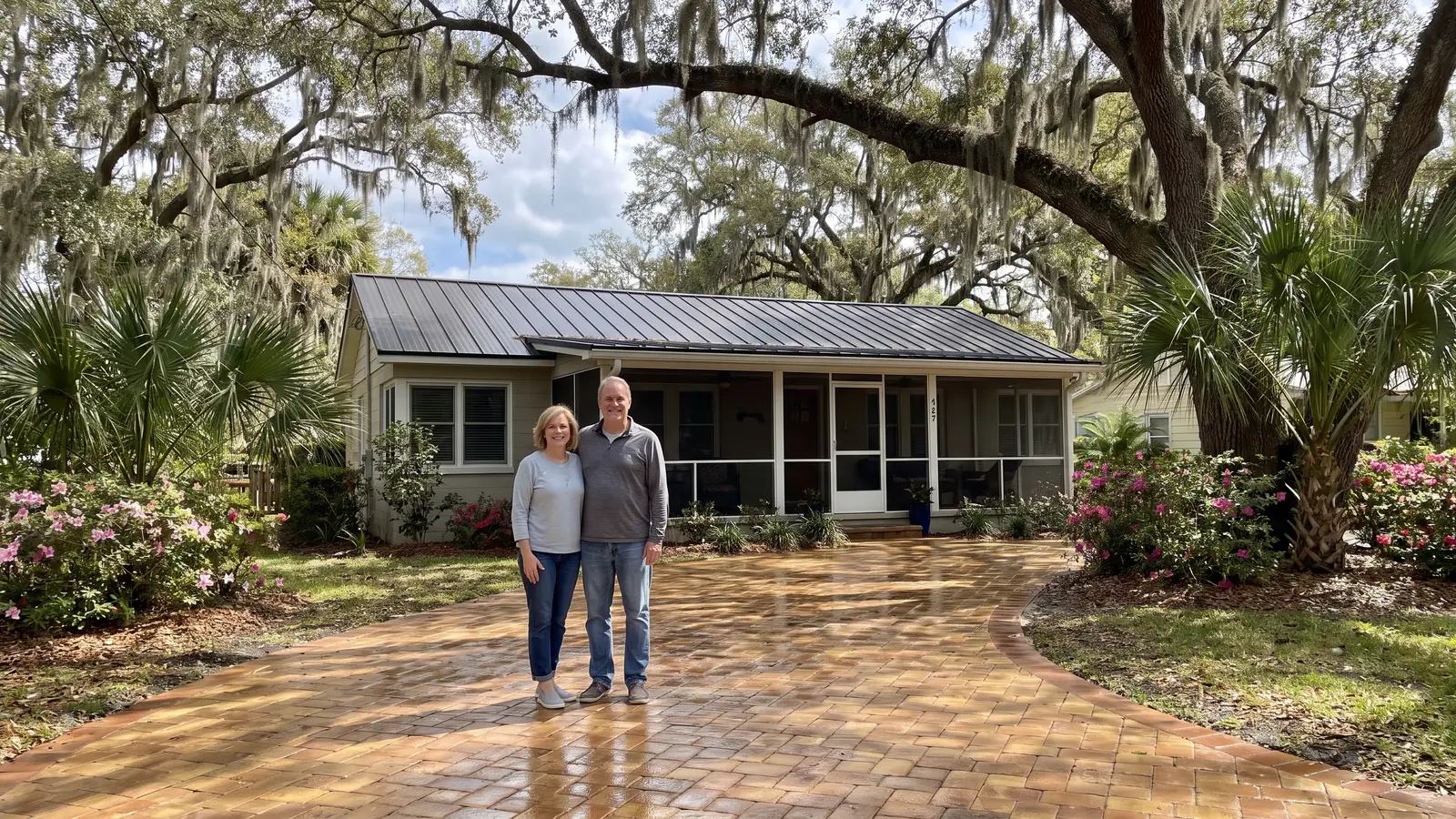
Paver sealing for St. Cloud homes
Paver Sealing in St. Cloud, FL
From the 1920s downtown streets to East Lake Toho, St. Cloud pavers can look new again, so call (321) 321-4984.
- Brings out deeper paver color
- Fresh joint sand helps lock pavers in place
- Gives weeds less room to grow
- Makes the surface easier to keep clean
- Free estimate, no obligation
Request a Free Estimate
Free, no obligation.
Fast, careful paver sealing in St. Cloud
St. Cloud homeowners can book paver sealing, with a free estimate from a local contractor, from the old downtown grid to the newer streets near the Turnpike. The crew washes the stone, packs the joints and applies sealer on drives, patios and pool decks. Call (321) 321-4984, and a contractor should reply within 1 business day, usually much sooner.
Maybe your drive has faded, and a line of green runs along the shady edge. A full wash, packed joints and a fresh coat bring one even color back. If typing beats talking for you, you can ask for a free estimate.
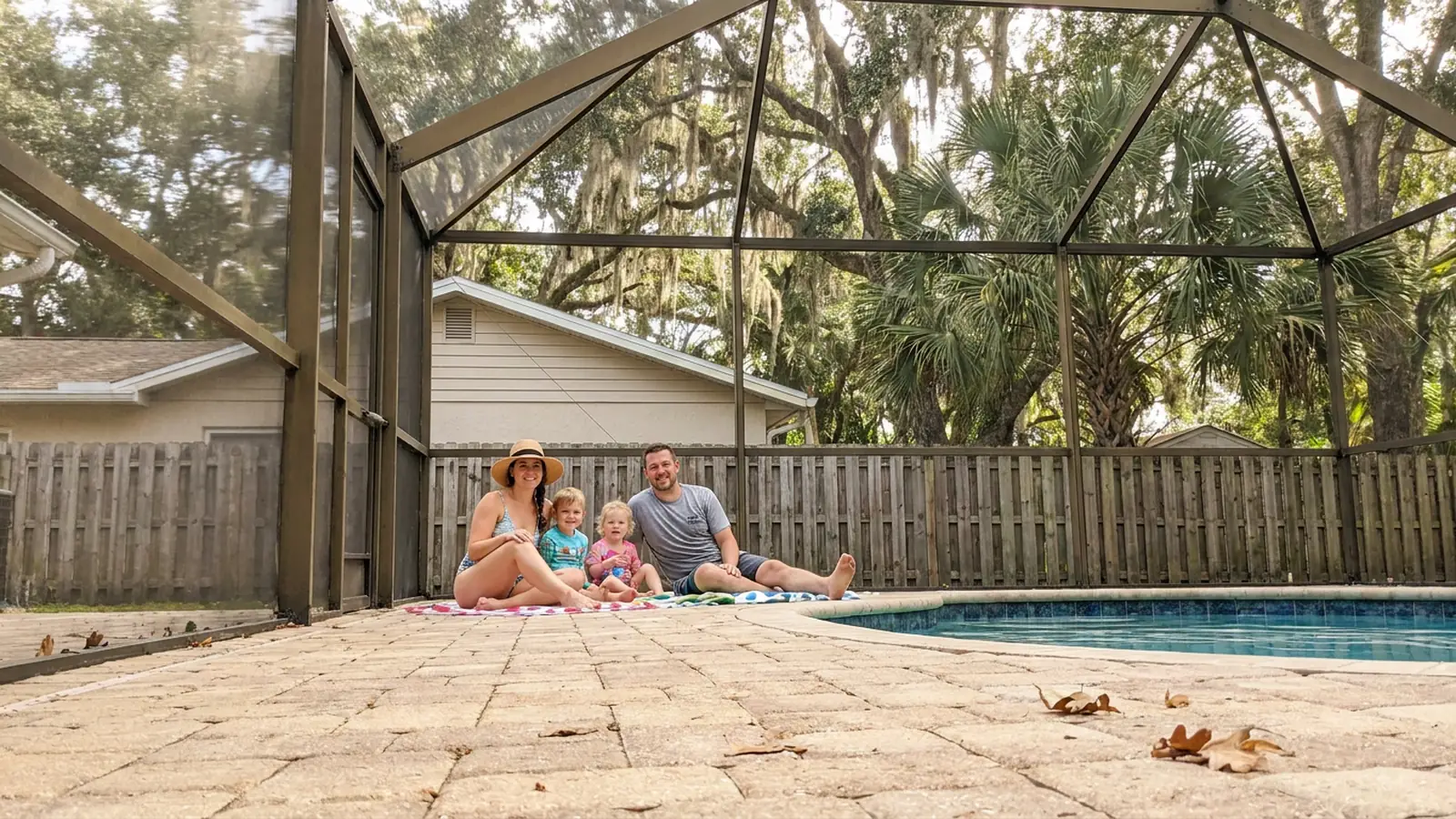
Why hire a local paver sealing contractor in St. Cloud?
St. Cloud mixes 1920s streets under old oaks with newer homes built close to the lake, and pavers age differently in each. A local contractor can tell the two apart at a glance, so ask for a free estimate and say where you live.
A look at no charge
The contractor inspects your St. Cloud drive, patio or pool deck for free and names a price first.
Prices to compare
Space Coast companies post $1.85 to $4.00 per square foot to clean, sand and seal. Line any St. Cloud bid up against it.
Grip or gloss
Matte looks natural and a wet look deepens color. Near a pool, ask which sealer holds the most grip when wet.
Your decision
You pick the day and whether to go ahead. A St. Cloud estimate commits you to nothing.
Get Your Free Estimate in St. Cloud
Tell us about your pavers in St. Cloud.
Free, no obligation
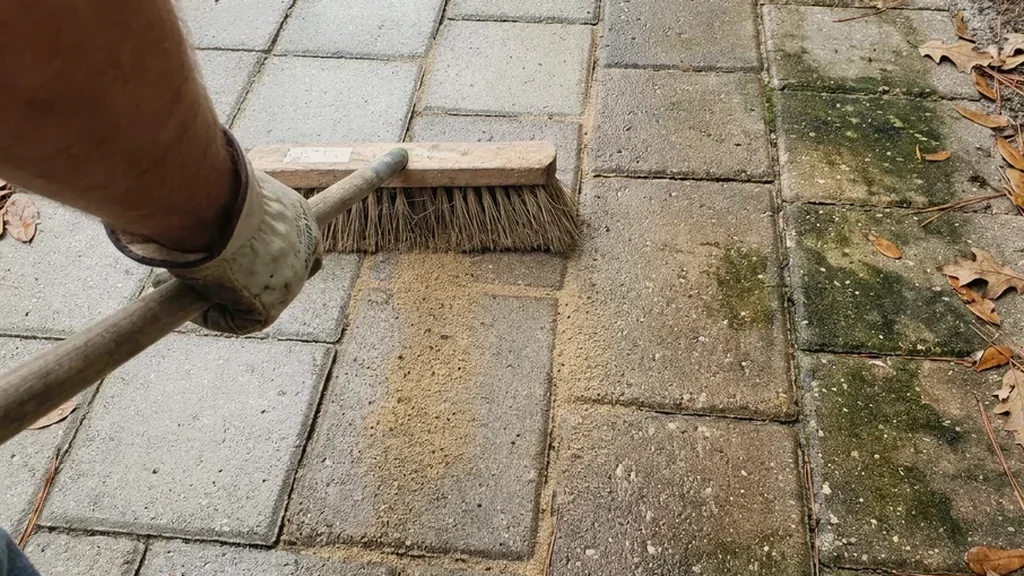
What paver problems show up most in St. Cloud?
Old oaks over older streets
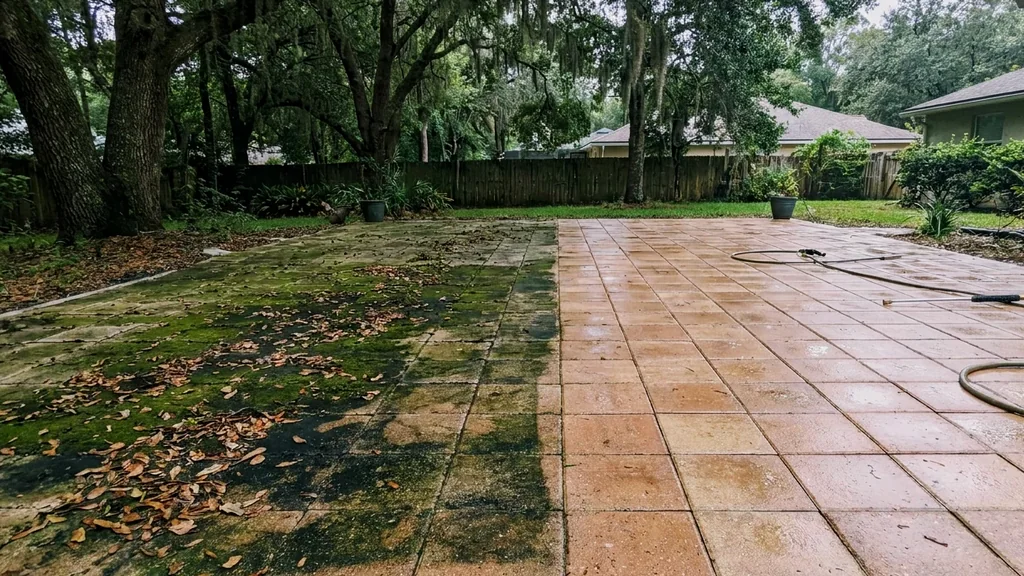
St. Cloud has many large trees, including ancient oaks, and homes that date to the 1920s boom. Shade and fallen leaves keep pavers damp. Damp pavers grow green film, and that film must be washed off before any sealer. Expect the worst of it under branches and along the north side of the house. A patio under an oak can stay green long after the sunny drive has dried. Most of the historic buildings stand along 9th and 10th Streets, and the older lots around them often carry mature trees.
Low ground cut by canals
Hamilton Disston dug canals around St. Cloud, and Canal 31 still links East Lake Toho to Lake Tohopekaliga. The lake's shores are marshy. Flat ground near water holds damp after a storm. Sealer needs a dry surface, so a low lot may need extra time before the coat goes on. The contractor checks the low corners of the drive first, since water leaves them last. East Lake Toho covers nearly 12,000 acres with marshy shores, so homes close to it sit beside a great deal of open water.
Sand that leaves the joints
Florida's soil is mostly sand, and St. Cloud is no exception. Heavy summer rain moves sand out of paver joints, and washing takes more, so a drive can look sound while the joints sit well below the surface. With joints open, weeds take hold and pavers can shift. Sand is replaced after washing and always before sealing. On a long drive, the contractor checks every run of joints, not only the edge by the garage. Walks and patios that were never re-sanded are the first to show gaps.
Newer pavers that are due a first coat
St. Cloud grew to 58,964 residents by 2020, so many homes came with pavers already down. A Florida company suggests sealing about six months after installation, once the stone settles and the early white salts, called efflorescence, appear. Unsealed pavers fade and stain sooner. Ask what, if anything, is on yours, and say when the pavers went in. The contractor can often tell at a glance if a first coat is due. Efflorescence is a powdery white salt deposit that appears when water evaporates from masonry, and it is common on new pavers.
Long, humid summers
The climate here is hot and humid in summer. A Brevard company says high humidity can extend drying times, which matters because sealer needs a dry surface. Shaded patios and pool-cage corners dry last. A job may start early, wait out a storm or move a day, and a screened lanai floor may need hours more than an open drive. A day's delay is cheaper than a coat that clouds or does not cure. Shaded patios and pool-cage corners hold moisture longest, so those areas are done last.
What should a St. Cloud homeowner tell a contractor first?
Say whether your home is in the old downtown grid or in a newer neighborhood. Downtown, City Hall sits four blocks north of US 192, and most historic buildings line 9th and 10th Streets. Homes near there are older, with older pavers, and the lots often have mature oaks. Share your cross street when you phone (321) 321-4984.
Newer areas lie along Canoe Creek Road, Hickory Tree Road, Nova Road and Kissimmee Park Road, which are county roads 523, 534, 532 and 525. Pavers there are often newer and may never have been sealed. A first coat is simpler than stripping an old one, so that can lower the cost. Call (321) 321-4984 and name your road.
Near the lake, the ground is flatter and the air is damper. East Lake Toho is almost five miles across, with a park, trails and a marina on the south shore. Homes close to it can see more green film and a longer drying time, since lake air carries damp onto shaded walks and pool decks. Mention how close you are when you call (321) 321-4984.
The St. Cloud Heritage Museum stands at 1012 Massachusetts Avenue, and most of the historic buildings line 9th and 10th Streets, four blocks from City Hall. GAR Memorial Hall, built in 1914, went on the National Register in February 1997. Canal 31 joins East Lake Tohopekaliga, a lake of 11,968 acres, to Lake Tohopekaliga. If your street is near downtown or near the canal, say so when you call (321) 321-4984.
What does paver sealing cost in St. Cloud?
Posted Space Coast prices span $1.85 to $4.00 per square foot for the wash, sand and coat. Where a St. Cloud job falls in that span depends on paver condition, sealer type and prep. A long drive or a pool deck added to the walk raises the total, and area is the biggest driver. For a quote on the paved areas at your address, ask for a free estimate.
The quote should record the area, the type of surface and any sealing history you know. Dips and loose pavers are repaired first, since sealing cannot correct a failing base. Heavy oak shade adds wash time, and open drives go faster. Call (321) 321-4984 and the contractor can tell you which of these matter for your St. Cloud job.
| Paved area | Typical example | Clean, sand and seal |
|---|---|---|
| 300 sq ft | Small patio or walkway | $555 to $1,200 |
| 600 sq ft | Two car driveway | $1,110 to $2,400 |
| 1,000 sq ft | Large driveway or pool deck | $1,850 to $4,000 |
| 1,500 sq ft | Driveway plus pool deck | $2,775 to $6,000 |
Math based on the $1.85 to $4.00 per square foot that Space Coast paver companies publish. Your contractor sets the actual price after seeing the surface. Repairs, leveling and stripping failed sealer are usually extra.
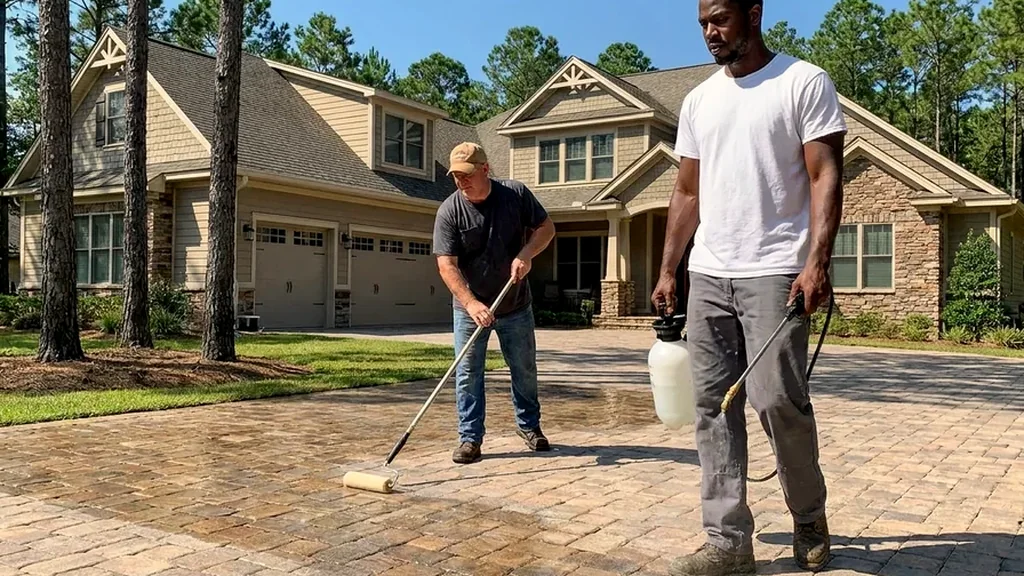
How does a paver sealing job work in St. Cloud?
Tour the property
The contractor walks the paved area and records its size, slope and shade, plus anything odd such as dips, loose stones, thin joints or clouded patches. Say when the pavers went in and whether anyone has sealed them. Newer pavers may only need a first coat.
Wash off the green
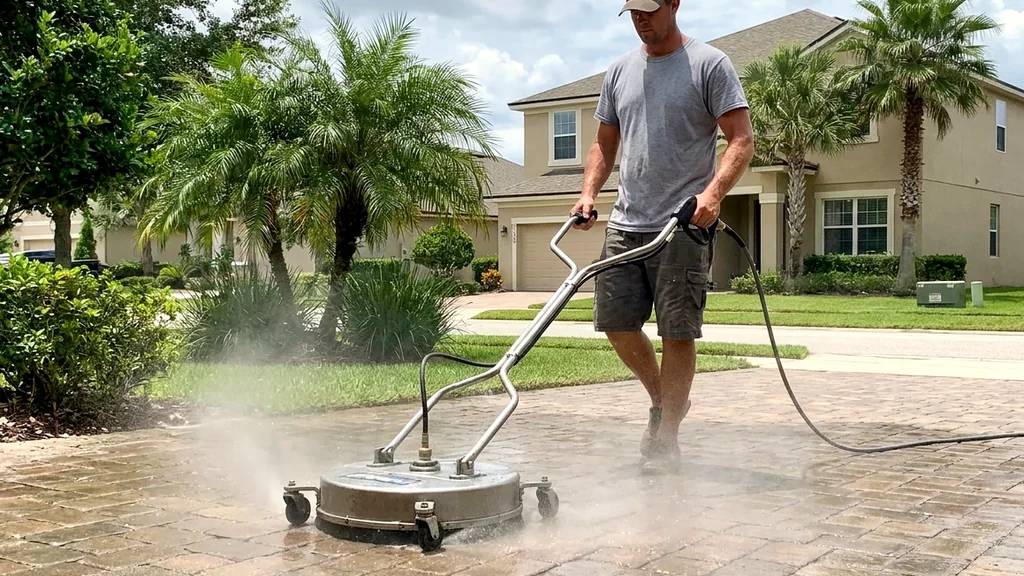
Green film, leaf stains and tire marks lift in the wash, with more time under oaks and along north walls. Plants, screens and pool equipment stay out of the rinse water. A rushed wash shows through within a season, so ask which plants will be covered.
Put the sand back
Sand is replaced after washing and before sealing. Full joints stop shifting, slow weeds and keep footing even. Low or loose pavers are fixed here, and the sweep-up closes the step. Long drives are checked from end to end.
Let the damp pass
A Brevard company notes that humid air can lengthen the time sealer needs to dry. Shaded patios and lake-side lots dry slowest. Sealing damp stone can leave a cloudy finish, so early starts are common.
Seal, cure, walk through
Sealer goes on in your chosen finish, often as a flood coat and a top coat. A Brevard company puts rain-ready at 45 minutes to an hour and a full cure at 48 hours. Firms quote two to five years per coat. A final walk-through lets you flag spots for a second look.
Complete paver services in St. Cloud
In St. Cloud the order is wash, sand, dry, seal. Sealer comes last so nothing dirty is locked beneath it, and long drives are done in sections so each part can be checked. Call (321) 321-4984 to ask how long each stage takes at your address.
Full sun fades a drive, oak shade turns a patio green, and a pool deck by the screen needs grip. Ask for each to be quoted on its own, and ask for a free estimate to begin.
Check what is on the pavers before choosing anything, because water-based sealer cannot go over solvent-based. Then pick matte or a wet look, which shows scuffs sooner. Near a pool, ask about grip, and call (321) 321-4984 to talk it through.
Summers in St. Cloud run hot and humid, and the weather sets the schedule. A Brevard company says September through May has lower humidity and less rain. Sealing can happen any month with planning. To book a date, dial (321) 321-4984 and ask what is open.
Questions to ask before you hire
- How often will my pavers need sealing again in Brevard's sun and humidity?
- Would a matte finish or a wet look suit my driveway better?
- How long before cars can park on the driveway again?
- Does the quote show how many square feet you measured and where?
- Does the sealer leave a pool deck slick underfoot after rain?
- Do you clean off the white haze that rises through pavers before you seal?
- Will you fix sunken or loose pavers before sealing, and is that priced separately?
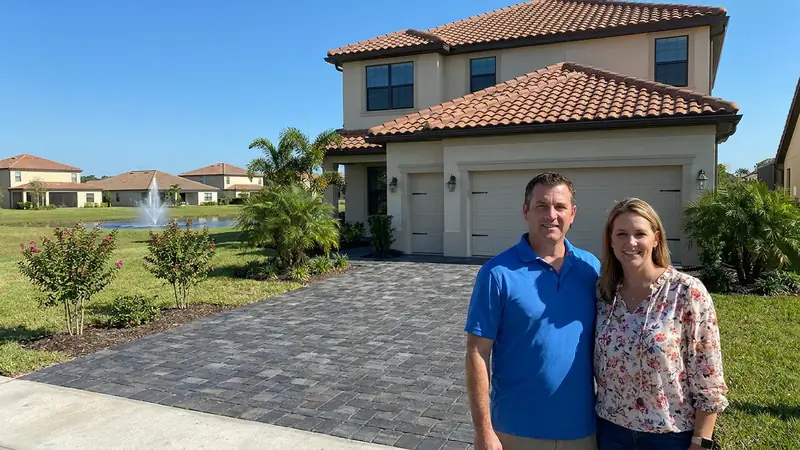
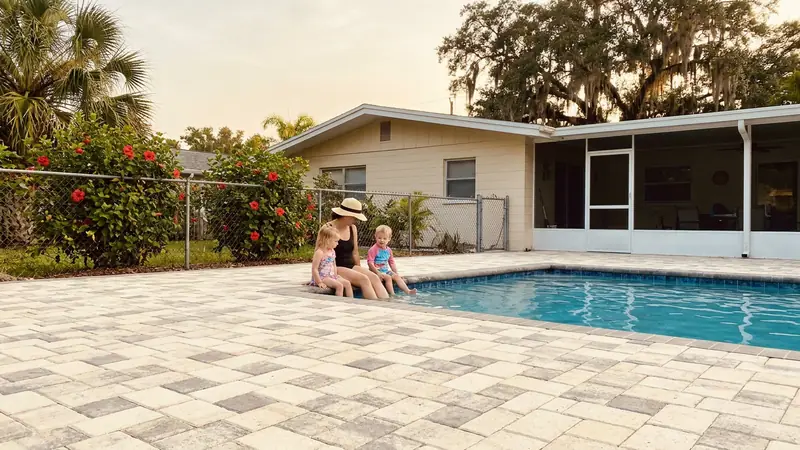
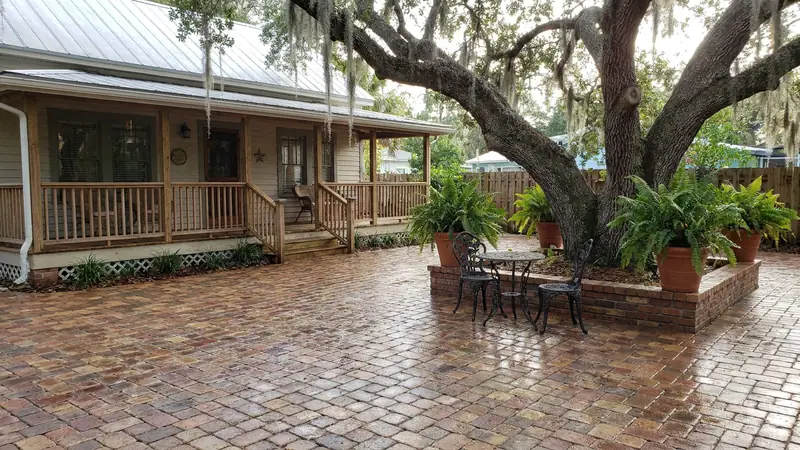
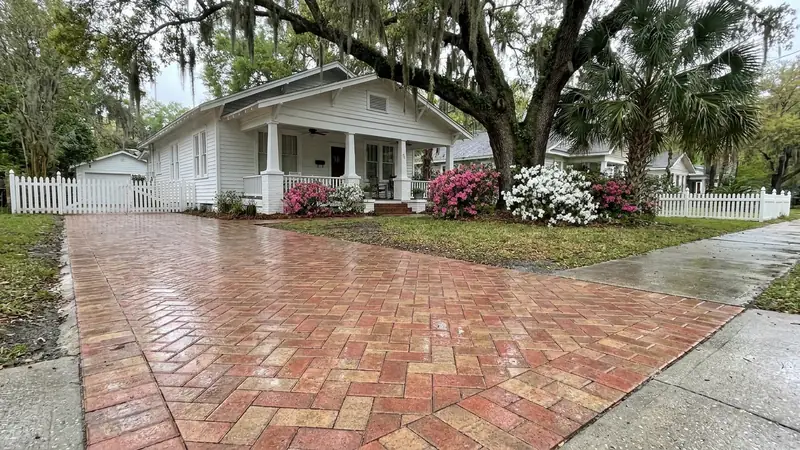
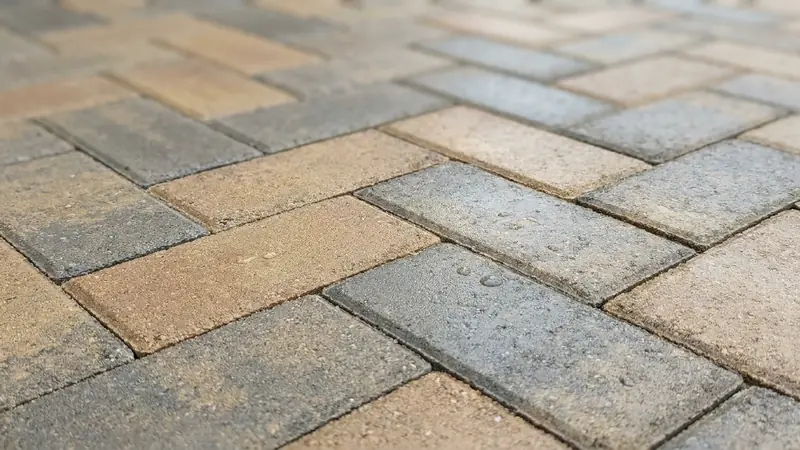
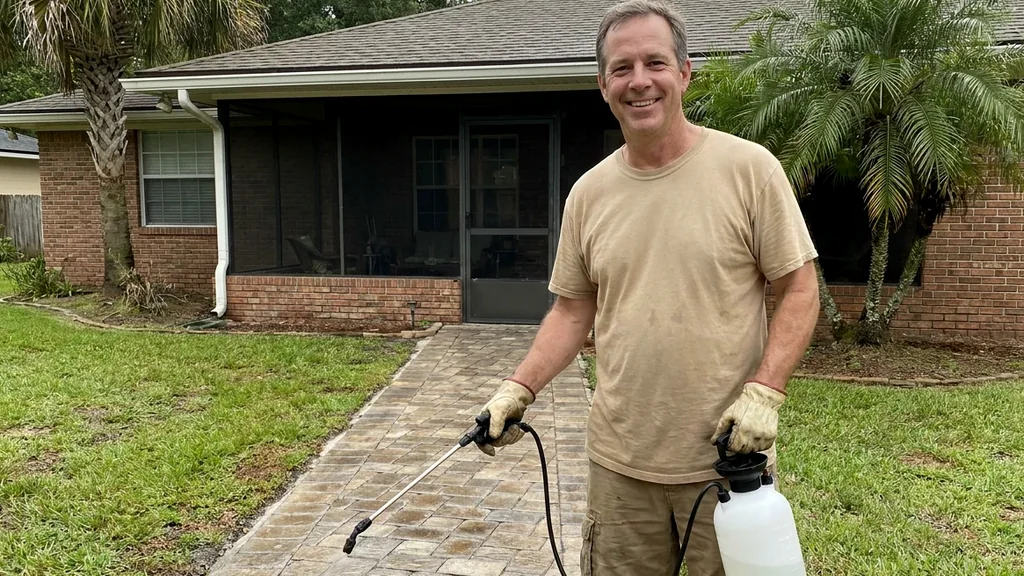
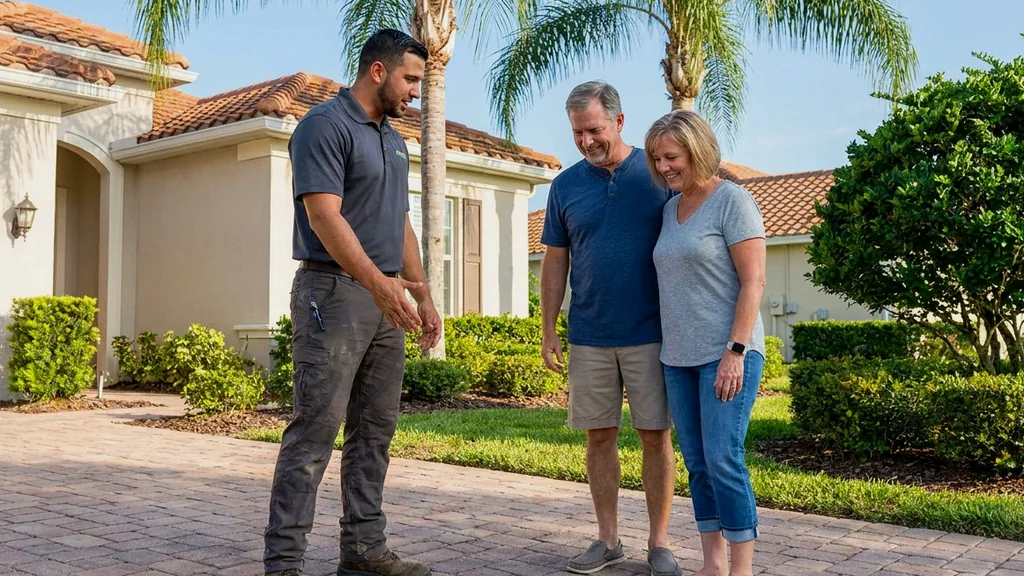
What do sealed pavers look like around St. Cloud?
Why local matters in St. Cloud
A contractor who works St. Cloud asks if you live near downtown or in a newer area, and how many trees shade the drive. Those answers shape the wash and the drying time. Someone from far off may not ask. To reach a contractor who covers St. Cloud, call (321) 321-4984.
US 192 runs east and west through town, and county roads out to Canoe Creek and Hickory Tree Road lead to newer streets. A contractor who has driven them gives an honest arrival window. Ask about open dates when you call (321) 321-4984.
St. Cloud holds new builds and 1920s homes, and their pavers differ. A local contractor asks about first coats, old coats and past repairs. If this describes your home, ask for a free estimate and mention about when the pavers were installed.
The streets near downtown carry homes from the 1920s boom under large old oaks, and the shores of East Lake Tohopekaliga are marshy. Oak shade and nearby water both shape how long a patio stays green after a wash. A contractor who knows the town asks how many oaks cover the drive and how close you are to the lake. Tell them when you call (321) 321-4984, and the quote can account for both.
How did St. Cloud begin?
It began as a sugar plantation. Hamilton Disston, who bought millions of acres of swampland, dug canals around St. Cloud and set up the sugarcane plantation in 1886 and 1887, and the Sugar Belt Railway ran to market from 1888. The Great Freeze of 1894 and 1895 ruined it. If you live near the old canal, one call to (321) 321-4984 sets things moving.
In 1909 the Seminole Land and Investment Company bought 35,000 acres for a veterans' colony, and the city was incorporated on June 1, 1915. GAR Memorial Hall dates to 1914, and the Heritage Museum sits in the 1922 library on Massachusetts Avenue. East Lake Toho lies just north of town, and its clear water shows 7 to 9 feet down. Near any of these St. Cloud places, call (321) 321-4984 and name your street.
Hamilton Disston bought 4,000,000 acres of Florida land and began digging canals around St. Cloud and Kissimmee. The Sugar Belt Railway, finished in 1888, carried sugar from Narcoossee through St. Cloud to Kissimmee. In 1909 the Seminole Land and Investment Company bought 35,000 acres here, and the city incorporated on June 1, 1915. To say when your pavers were laid, ask for a free estimate.
Frequently Asked Questions
How often do pavers in St. Cloud need resealing?
Quotes from sealing firms run two to five years per coat. A Brevard company puts the schedule at two to three years in Florida, and shorter in high-traffic areas. Oak shade and a busy St. Cloud drive can point to the short end. The contractor can judge your coat's wear and give you an honest read.
In St. Cloud, is it better to spray or roll paver sealer?
Rollers were used on one Brevard pool deck, and another Florida company puts down a flood coat and then a top coat. Ask what method will be used for your sealer, and how it reaches the joints. Breezy days may call for a different approach.
In St. Cloud, what is the average cost to seal pavers?
There is no single average, but Space Coast companies post $1.85 to $4.00 per square foot to clean, sand and seal. Size, shade growth, an old coat to strip and dips to repair move a job inside that range.
In St. Cloud, what is the average price to seal pavers?
Companies post $1.85 to $4.00 per square foot. A larger drive costs more in total even at the same rate, and an easy, clean job costs less. Ask for the measured area in writing so you can compare bids line by line.
What drawbacks come with sealing pavers in St. Cloud?
Coats wear out and have to be renewed, and a wet look shows scuffs earlier than matte. Wet weeks can delay a job, and a rainy summer can push a date back. Neither a failing base nor a drainage issue gets fixed by sealer. A rainy week is the usual cause of delay.
In St. Cloud, is it good to seal pavers?
Often yes. A Florida company says sealing helps extend paver life and protects color and joints, and a Brevard company says a fresh coat every two to three years suits Florida. The free estimate shows whether yours need one now. A faded color or green joints are the usual signs it is time.
When should new pavers in St. Cloud get their first coat?
A Florida company recommends about six months after installation, so the pavers can settle and early white salts can show up. Many St. Cloud homes came with pavers already laid, so ask the contractor to check yours.
Does oak shade change how long sealer lasts in St. Cloud?
Shade does not wear a coat the way sun and tires do, but it keeps pavers damp, and damp pavers grow green film. A Brevard company notes that humid air extends drying times too. Check shaded patios first when you judge your coat.
Are downtown St. Cloud pavers different from newer neighborhoods?
Often. Downtown lots date to the 1909 veterans' colony and the 1920s, while many newer streets came with pavers already laid. Older pavers may carry coats nobody wrote down, and newer ones may need a first coat. A quick look settles which you have.
Will sealing stop weeds between my St. Cloud pavers?
Sealing slows weeds, but it cannot promise a weed-free surface. A Florida company names weed prevention as a benefit, while a Brevard company cautions that sealing does not promise a maintenance-free surface. Full joints and a sound base do the most work.
What time of year suits sealing pavers in St. Cloud?
A Brevard company says September through May offers lower humidity and less rain. St. Cloud summers are hot and humid, so the cooler months leave more room. Any date still depends on the pavers being completely dry.
How long does a St. Cloud paver job take?
Many homes take one to two days, a Brevard company says, and a Florida company calls a typical job a one-day affair when the weather allows. Large drives and shaded patios stretch it. Ask for a schedule when you book.
Nearby areas we serve
Ready for a Free Estimate in St. Cloud?
Call (321) 321-4984 and tell us about your pavers.
Free, no obligation